
Anyone who has lived in—or even visited—Central Florida knows the nightmare that is I-4. While thousands of people traverse its treacherous lanes daily, many of us actively avoid venturing into the automotive masses unless absolutely necessary. As I get older and more people continue to flood into the humid morass that is my home, that avoidance has only solidified. It now takes something quite special to justify heading into eastbound traffic, and often whatever convinced me to do it ends up not being worth it.
This particular instance was the Florida Film Festival, but more specifically, a Saturday night screening of Obsession. After many hours of anxiety and debating whether I actually wanted to follow through with my commitment, I made the perilous journey. I suffered through traffic and ended up sitting next to one of the most obnoxious couples I’ve ever encountered at a screening—who clearly thought they were in their own living room. Despite all of that, I loved this movie so much that it made the entire trip feel like a minor inconvenience rather than the horrendous trek it actually was.
What ultimately pushed me to attend this screening—despite the many valid reasons not to—was the recommendation of multiple friends and fellow film critics who strongly advocated for it. I was largely unfamiliar with the film’s director, Curry Barker, and not entirely sold by the trailer. Not to mention, the film is getting a “wide” release in May, so I could have just waited to see it alongside everyone else who hadn’t caught it during its festival run. These friends know my aversion to this particular drive and insisted I wouldn’t regret it. They couldn’t have been more right.
Barker’s film focuses on Bear (Michael Johnston), whose love for his close friend Nikki (Inde Navarrette) goes unreciprocated. After struggling to tell her how he feels, he instead makes a wish on a novelty toy called “One Wish Willow”—which, to his surprise, works. He finally has her affections returned, but quickly discovers that her love comes at a cost that may be too high to pay.
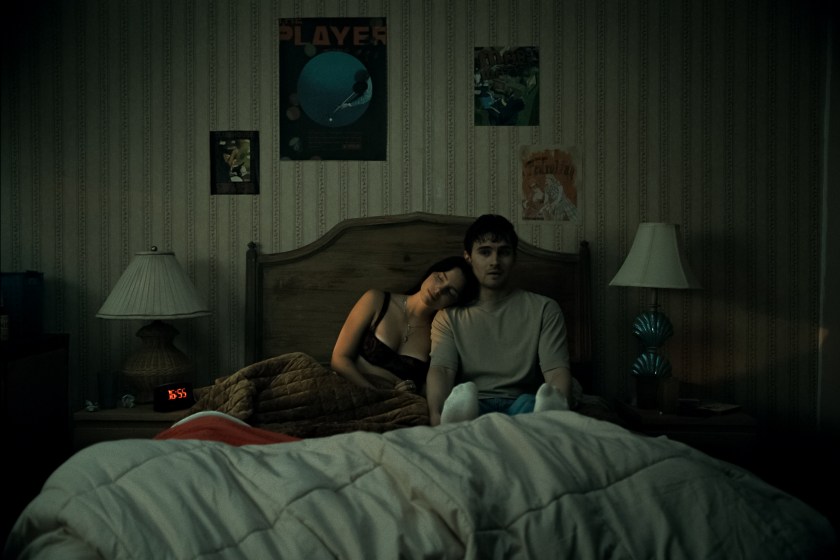
On its surface—and based on what the trailer sells—this is a familiar tale. Anyone acquainted with The Monkey’s Paw in any of its forms, including the iconic Simpsons Treehouse of Horror II episode, will recognize the pattern and the inherent lesson of “be careful what you wish for.” Barker, however, proves to be far more inventive than that framework might suggest. He uses it as a foundation to craft something that feels genuinely original where it matters most. His command of tone and character elevates the material beyond its familiar setup. Of course, if the cast weren’t up to the challenge, the film could easily fall apart—but that’s never a concern here.
Navarrette deserves serious recognition for her performance. Her ability to create unease, discomfort, and a clear distinction between who Nikki was before the wish and what she becomes after it is incredible. Her facial expressions and body language do so much of the storytelling that it becomes impossible to look away. While many of her actions veer into the monstrous or deeply unsettling, she still manages to retain a sense of humanity. That balance is a testament not only to her performance, but also to a script that understands its supposed “hero” may actually be the villain. A great comparison is Scott Pilgrim vs. the World, where the titular character becomes so obsessed with Ramona Flowers that he disregards who he hurts along the way. That same selfishness is on full display with Bear, who makes his wish without any real consideration for Nikki’s autonomy or feelings.
Often, in “friendzone” stories, the audience is positioned to sympathize with the person whose romantic desires are rejected. While that is the initial framing here, Bear’s refusal to accept the consequences of his wish makes him far less empathetic as the story unfolds. This awareness in Barker’s film is what allows it to stand out, and ultimately justifies the audience’s uneasy delight in watching the consequences Bear is forced to endure.
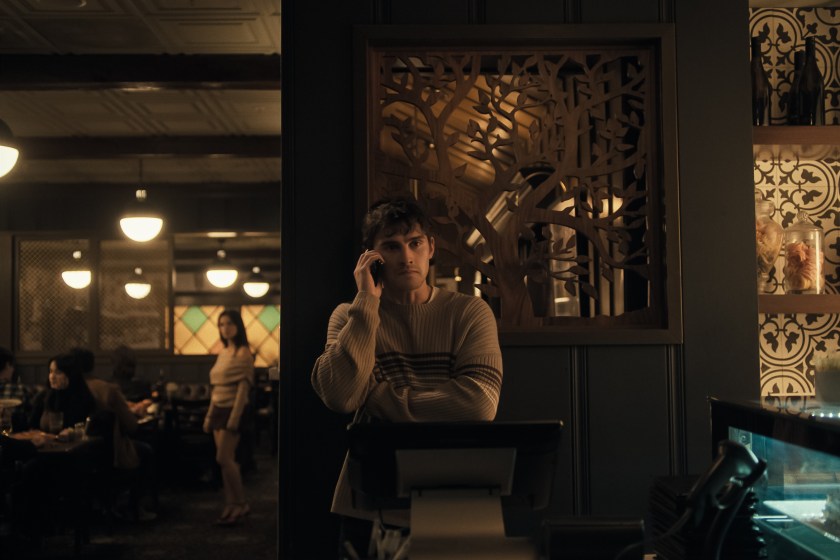
By comparison, Johnston’s performance may initially seem more subdued, but he brings exactly the right energy to the role. His reactions to Nikki’s increasingly disturbing behavior ground the film in a way that allows the tonal balance to work. The blend of horror, cringeworthy discomfort, and comedy is incredibly difficult to pull off, but Obsession navigates it with impressive precision. That success is a credit to the performances, the writing, and Barker’s direction.
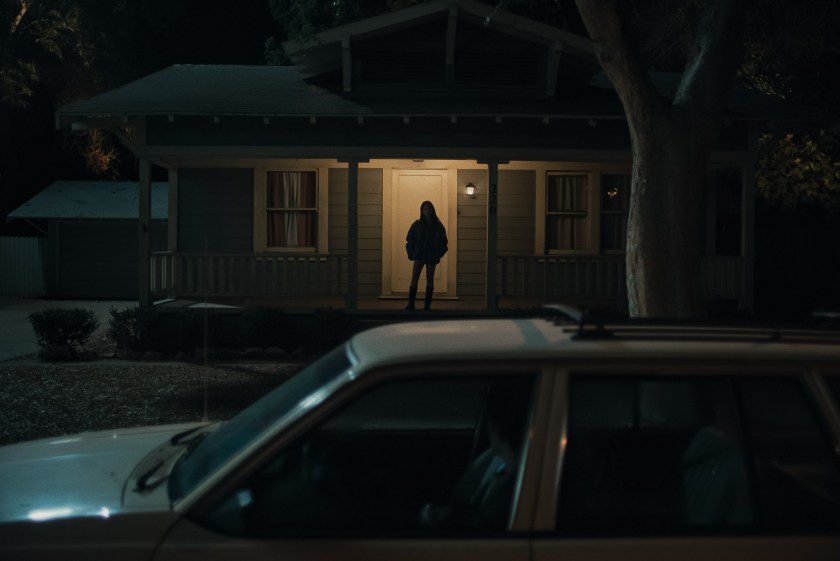
While there are plenty of standout moments, the cinematography deserves special mention. The film frequently casts Nikki in silhouette—not just as a striking visual choice, but as a storytelling device that reinforces her transformation. One sequence, in which she emerges from a dark corner, is among the most haunting images I’ve seen on screen in quite some time. These moments linger long after the credits roll, embedding themselves in the viewer’s mind in a way that gives the film’s title an added layer of meaning. We, too, become obsessed.
Recommending horror films to non-horror fans is always tricky. I never want to suggest something that might hit in a way someone isn’t prepared for. But when a film transcends its genre and allows its craftsmanship to shine through, it becomes much harder not to champion it. Obsession feels like one of those films—one that audiences should seek out regardless of their usual preferences. See it with a crowd, on a big screen, and let yourself get swept up in what Barker and his collaborators have created. If it can make that horrendous drive on I-4 feel like a minor inconvenience, then it’s clearly doing something right.
Obsession will be in theaters on May 15.
Rating: 5/5
 Berkreviews.com