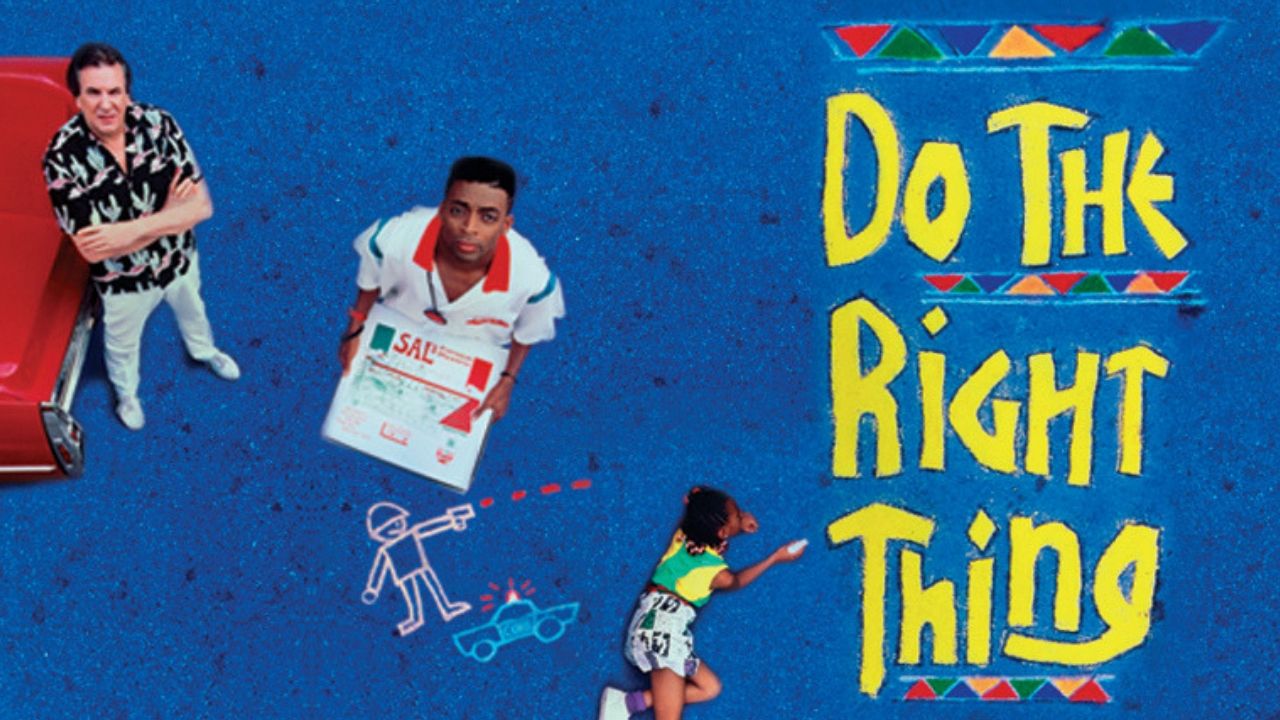
In 1989, Spike Lee gave us one of the greatest summer movies of all time, Do the Right Thing. It’s a film where you can nearly feel the heat pouring from the screen because it is embedded in the production design, the characters, and the rising tension of the story. The red hues paired with the beads of sweat pouring down everyone’s face were a constant reminder to you, the viewer, of just how hot this New York summer was. Pair that with the tension of Sal’s Pizzeria and the various members of the Bedford-Stuyvesant neighborhood in Brooklyn, and the heat is simply undeniable.
I was very late in watching Do the Right Thing. My first viewing of it was back in 2016 when I was towards the end of my initial self-challenge with the goal of expanding my tastes with this form of art. This film was a gut punch, and one that opened my eyes to a variety of things, each significant — with, perhaps, my love of Spike Lee movies being the biggest. The way Spike navigates this story culminates with the big, devastating finale. This film was one of many that reminded me of the power the medium possesses to help immerse the viewer in worlds that they otherwise may not be able to experience.
It is a simple reminder of the often-cited Roger Ebert quote that movies are empathy machines. Films possess the ability to transport us to both fictional spaces and real ones alike; familiar characters that feel like us or ones who are complete opposites; situations we deal with day to day or ones we have never encountered. The lesson we can take away from those vicarious experiences is that there is a great opportunity to improve ourselves firsthand. From there, we have the opportunity to choose to take action when we see something that feels innately wrong or to choose to remain silent. Movies can be entertaining, and in some cases, that may be their only goal. We often refer to these types of films as “popcorn movies” or “blockbusters”. However, movies can remain entertaining, and still stir something inside of you that ultimately shapes who we will become — or serve as a reminder of the need for human connection and togetherness.
Robert Zemeckis’s Cast Away (2000) speaks to both of these ideas. We watch Tom Hanks as Chuck Noland struggles to survive when he finds himself washed up on an island after surviving a horrific plane crash. He longs for a connection to anyone and finds it with Wilson, a volleyball. Who among us doesn’t shed a tear when that friendship ends so abruptly and painfully, as Hanks screams his companion’s name? In a time when we are more connected than ever — we, as a species, seem to feel more withdrawn and alone. These feelings were only further exacerbated when the world found itself forced to isolate in 2020. Movies can remind us that we are not on an island, that we are not alone, and that we truly need each other to make things better.
The fear of being singled out may lead us to a major decision in our lives when it comes to taking action. The fear of being on the wrong side of a debate, being bullied as a result of our thoughts, or the idea of potential reprisal are all powerful deterrents to decisive action. John Mullaney has a joke about being a child and witnessing a friend getting bullied. He was over on the bench but didn’t intervene. It’s clear he wasn’t the one generating the violence, but his silence allowed it to continue. Storytelling, one of my favorite aspects of cinema, allows us to see what could come to be if we choose to sit idly by while injustice is happening directly in front of us. It allows us to play out hypotheticals of potentially real-world conflict. It also allows us to bear witness to the people who refuse to sit by quietly, and the multitude of outcomes that follow.
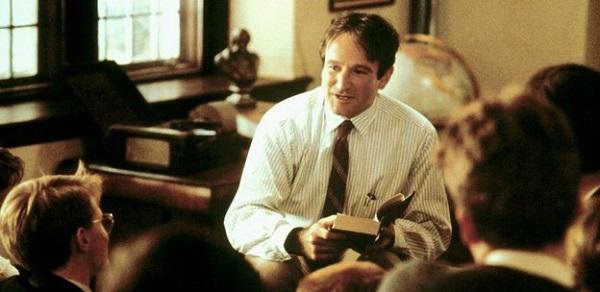
In Dead Poets Society (1989), Robin Williams plays John Keating, whose passion for life, literature, and his students is a powerful one. The moment that has always sat with me is encapsulated in the following quote: “We are food for worms, lads. But if you listen real close, you can hear them whisper their legacy upon that wall. Carpe. Carpe Diem. Seize the day, boys. Make your lives extraordinary…What verse will you contribute?”
Keating is speaking with his students and making the case for the power of art, love, and passions that ultimately make life worth living. The question of what verse they will contribute speaks to the tapestry that is human existence. When we look back on our contributions to the universe as humans, will we be proud of what we’ve left? This speaks to legacy in some ways, but also to the type of action we choose to participate in. Will you have made the world a better place, or a worse one? Furthermore, if you believe the things you are doing are making it better, it then begs the question of: for whom? Is it a small number of individuals, or the greatest number of humans possible?
Silence is easy. It requires no air from our lungs. It takes no physical movement or effort. It is truly the absence of action. Choosing to speak, however; now there is the challenge. We can look through a variety of stories, both real and fictional, and observe plenty of examples of those who refused to succumb to the ease that silence offers. Atticus Finch in To Kill a Mockingbird (1962) stands against the majority of the community to defend Tom Robinson. Luke Skywalker could have just stayed on Tatooine, but he was ready to end the tyrannical empire in Star Wars (1977). Then, of course, the powerful Spielberg film Schindler’s List (1993), where Oscar Schindler initially starts helping Jewish people for his own benefit before feeling compelled to do something more. There are a million examples we can pull from, and subsequently learn from. Is it our duty to stand up to injustice, as it wouldn’t take much for us to become the target of hate and oppression?
That’s ultimately the conflict of Do the Right Thing. Mookie’s loyalty is split for much of the film. He has worked at Sal’s Pizzeria for a long time, and that shop is a staple of the community. However, when tensions escalate – and Sal’s store is no longer just a store – but a symbol of that oppression in the community, he can no longer stay neutral. It’s a reminder that our actions have consequences – threads in the tapestry of humanity. The art that I love speaks to the human ability to not only create monuments to love but also maintain the responsibility to stand against the horrors that humans are able to commit.
The art we cherish, from the scorching streets of Brooklyn to distant galaxies, doesn’t just entertain; it illuminates our shared humanity and demands a response. It reminds us of our innate capacity for love, and, crucially, our solemn responsibility to stand against the horrors that human beings are capable of committing. This is why I can no longer remain silent. When people are being torn from their families and lives, when the pursuit of equality is twisted into something seen as ‘bad’, and when speaking against the killing of others invites anger, silence becomes complicity. Just as Mr. Keating implored his students to consider their legacy with “What verse will you contribute?”, we, like Mookie, stand at a precipice, faced with the undeniable choice to “do the right thing”. Each action and each voice raised weaves a vital thread into the grand tapestry of human history. To choose empathy and courageous action is not merely a moral obligation –it is the truest blockbuster of all…the most extraordinary legacy we can leave.
 Berkreviews.com