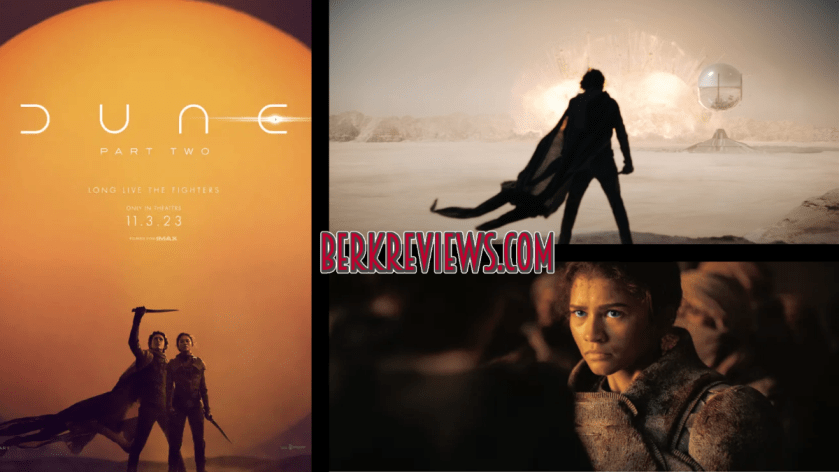
Denis Villeneuve has repeatedly demonstrated why he is one of the best working directors in the industry right now. Dune: Part Two is a booming triumph of cinema, taking a dense fantasy world, keeping its complexity, and converting it into a visual masterpiece. The performances elevate in part two to match the intensity of the story and the stunning images presented on the screen. This feels like a film that rewards fans with multiple viewings, as they take note of all of the various elements they may have missed, or simply misunderstood previously.
Paul Atreides (Timothée Chalamet) is building a relationship with the Fremen while on a path of revenge against those who destroyed his family. Paul faces a choice between the love of his life, Chani (Zendaya), and the fate of the known universe. His visions make the future look bleak, and he must decide if he will take on the burden of leadership and being the prophesied: “chosen one”.
Chalamet brings a ferocity to his portrayal of Paul which audiences haven’t seen from him previously. His small build, something Duncan (Jason Mammoa) joked about in the first film, made it seem unlikely that he could be as believable or capable a fighter as he is. However, not only do the action sequences work for his style and look, but Chalamet can channel some sort of inner beast that breaks through during multiple moments. While his angsty teenager vibe is still present, it works within the context of this interpretation of the story. This Paul doesn’t want to be the “one” and views his role as a necessary evil for the greater good; he has a chip on his shoulder about his role in all of this.
A frequent complaint about the first film was the severe lack of Zendaya. Those who held that belief will be much more satisfied with her presence in this film. Chani is an incredible character, and Zendaya owns every bit of it. A central debate about the film is the idea of faith heavily contrasted with Javier Bardem’s character and Zendaya. Both are awesome to watch in this film, and the ideas bantered about make for compelling internal debates. There are tons of great performances in this incredible ensemble cast.
Rebecca Hall, Florence Pugh, Christopher Walken, Josh Brolin, Dave Bautista, Léa Seydoux, and Stellan Skarsgård all make big impressions in one way or another. Austin Butler, however, was the wild card both in terms of casting and his character. Feyd was played by Sting in David Lynch’s 1984 film and left some big space briefs to fill. Butler’s version is much scarier and honestly gets a lot more to do in this version of the story. Butler’s presence is incredible, and his Skarsgård impression is impressive. There were a few scenes where it was hard to tell which character was speaking until it showed it was Feyd and not Barron.
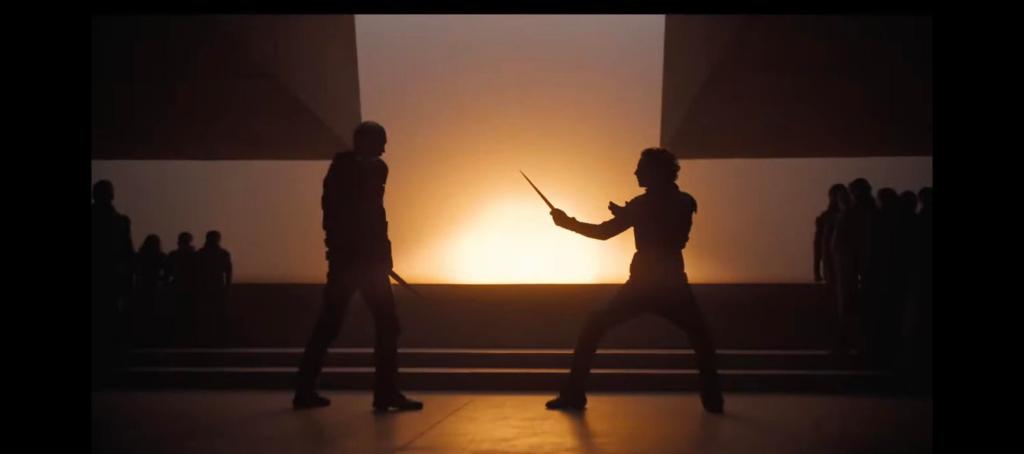
While many moments are just incredible to look at, the introduction of Feyd and the Harkonnen home planet is the most incredible. We are told the sun is black, and it inverts all the colors. Most of the time, the Harkonnens in Villeneuve’s film are shown wearing black. Here, their costumes turn white, and the world just looks insane – which makes a lot of sense. Feyd is celebrating his birthday in a gladiator battle – as one does, of course – and the entire sequence is absolutely jaw-dropping.
Sometimes, you walk out of a film feeling deflated, and other times you’re pumped full of energy knowing you’ve witnessed an incredible piece of art. Dune: Part II feels different than both of those things. In those two examples, those feelings often fade over time, as it was such extreme that they are impossible to sustain. This feels more akin to knowing that this film and its first part will likely be a part of our cinematic history in a far more impactful way.
Dune: Part Two will be in theaters everywhere on March 1st.
Rating: Must See.
 Berkreviews.com