
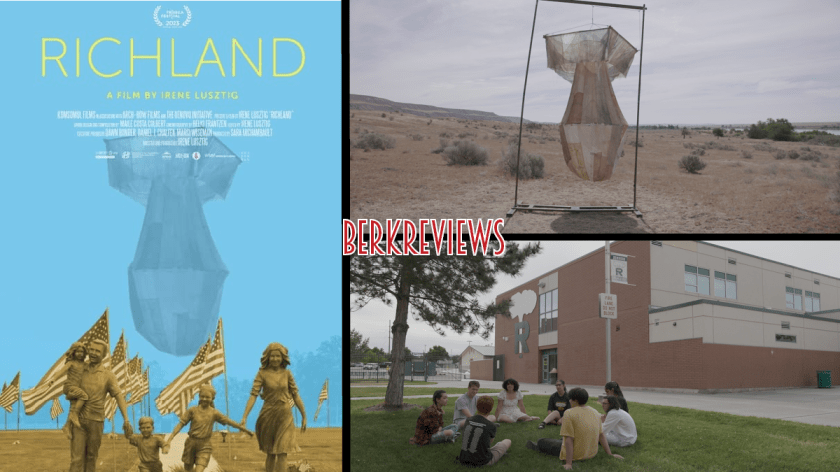
Richland is the new documentary from director Irene Lusztig – and it’s a powerful one. Choosing often to linger on incredible cinematic shots that encourage the viewer to meditate on the complexity of the subject matter, Richland is a prime example of the power of hearing stories from the people impacted the most. The interviews, archival footage, and modern footage are constructed into one incredibly impactful film.
The movie depicts various parties living in Richland, Washington – a town built by the US government to house the Hanford nuclear site workers who manufactured weapons-grade plutonium for the Manhattan Project. Many of the town’s citizens are proud of its heritage as a nuclear company town, and proud of the atomic bomb it helped create. The film explores a multitude of perspectives including nuclear workers, community members, archeologists, local tribes, and a Japanese granddaughter of atomic bomb survivors while ultimately allowing the audience to come to their own conclusions.
One element of the town that the film rightfully gives a lot of attention to is the high school logo. The first indication that the town is proud of its heritage is footage of a football game and the realization that the school is the Richland Bombers. Their logo is a very traditional-looking high school “R”, but behind the familiar font is a mushroom cloud. This is returned to in a few different discussions throughout the film, and it takes center stage when a teacher discusses being an outcast for suggesting the logo be changed. His stance is a complex one, and many may find some of his comments to be a bit controversial. The sequence of high school students sitting outside of the school debating the mascot’s relevance is even more compelling though, and provides a great juxtaposition to many of the other interviews in the documentary.
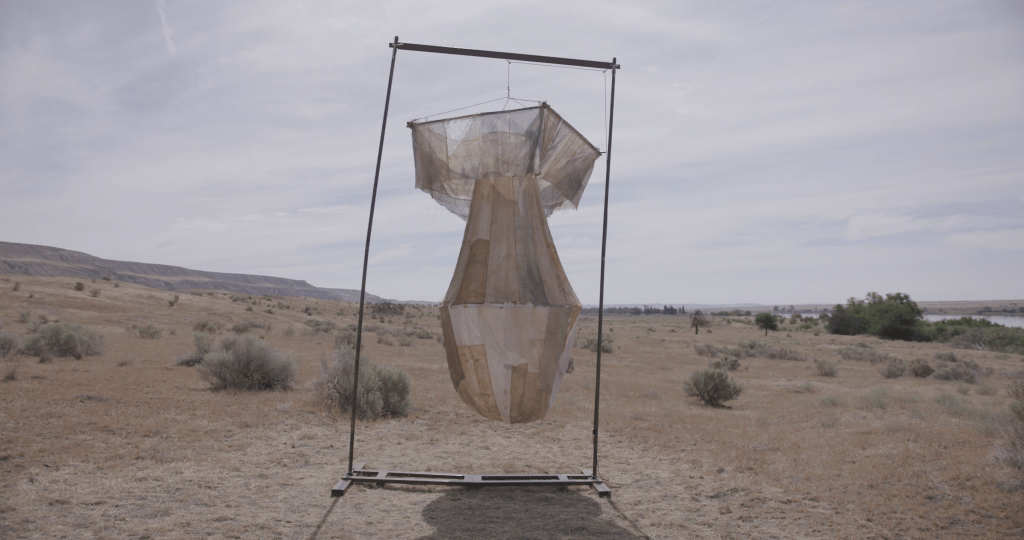
Multiple times in the documentary a person reads from the poetry book “Plume” by Kathleen Flenniken. The person who read it then often gives their reactions or explanation as to why they chose that particular poem. All of these moments resonate for both the words from the poem, the genuine reactions of the person, and the staging of the moment. In one such reading, the person sits in front of the Columbia River, and a family is slightly out of focus setting up blankets and swimming. An even more arresting visual is a choir singing inside a nuclear plant. The film is full of moments that will surprise the audience, and likely burn them into our memories.
Some documentaries feel like optional viewing for people with just a passing interest, and then there are some that feel like essential viewing. It is all the more impactful if you go into the documentary with minimal knowledge of the subject matter, making it feel like a revelation when watching it. Richland achieved all of that for me. I feel like I’ve learned so much, and have a desire to learn more. The final image before the final title card will forever be in my memory.
Richland had its world premiere at Tribeca on June 11.
Rating: Must See
 Berkreviews.com
One comment